University of Sussex JRA Conference
Intra-Individual Variability in Sleep and Pain Instability in Chronic Pain
Anna Sibson, University of Sussex, UK
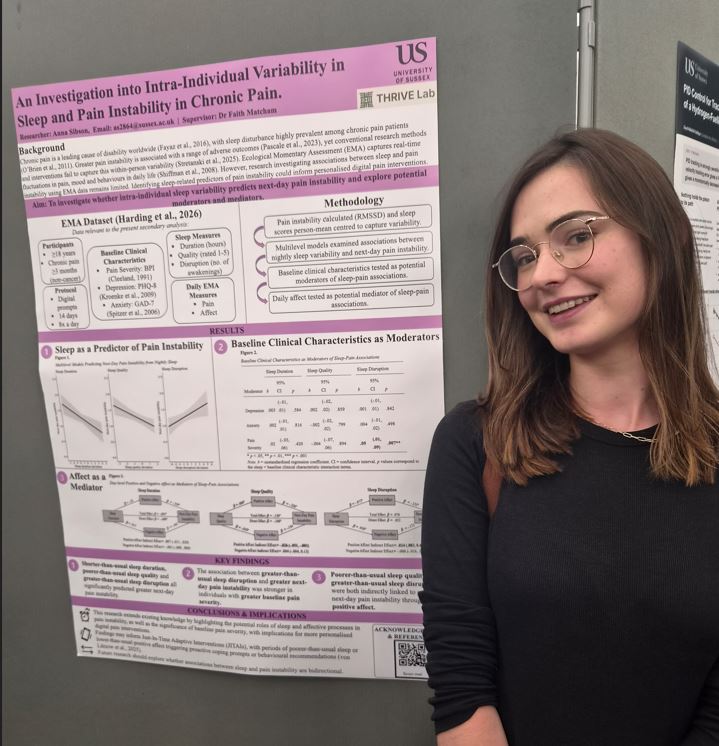
THRIVE Junior Research Associate Anna Sibson presented her work examining the relationship between intra-individual variability in sleep and pain instability in chronic pain at the University of Sussex JRA conference on 13 October 2026.
Chronic pain is a leading cause of disability worldwide, and sleep disturbance is highly prevalent among people living with chronic pain. Greater pain instability is associated with a range of adverse outcomes, yet conventional research methods and interventions often fail to capture this within-person variability. Ecological Momentary Assessment (EMA) offers a way to capture real-time fluctuations in pain, mood, and behaviours in daily life, but research investigating associations between sleep and pain instability using EMA data remains limited.
Using EMA data from a study of adults with chronic pain, Anna examined whether night-to-night variability in sleep predicted next-day pain instability. Pain instability was calculated using the Root Mean Square of Successive Differences (RMSSD), and sleep scores were person-mean centred to capture variability. Multilevel models were used to test associations between nightly sleep variability and next-day pain instability, with baseline clinical characteristics tested as potential moderators and daily affect tested as a potential mediator.
The findings showed that shorter-than-usual sleep duration, poorer-than-usual sleep quality, and greater-than-usual sleep disruption all significantly predicted greater next-day pain instability. The association between greater sleep disruption and next-day pain instability was stronger in individuals with greater baseline pain severity. In addition, poorer sleep quality and greater sleep disruption were both indirectly linked to greater next-day pain instability through lower positive affect.
This research extends existing knowledge by highlighting the potential roles of sleep and affective processes in pain instability, as well as the significance of baseline pain severity. The findings have implications for more personalised digital pain interventions. In particular, they may inform Just-In-Time Adaptive Interventions (JITAIs), where periods of poorer-than-usual sleep or lower-than-usual positive affect could trigger proactive coping prompts or behavioural recommendations. Future research should explore whether associations between sleep and pain instability are bidirectional.
 THRIVE Lab